
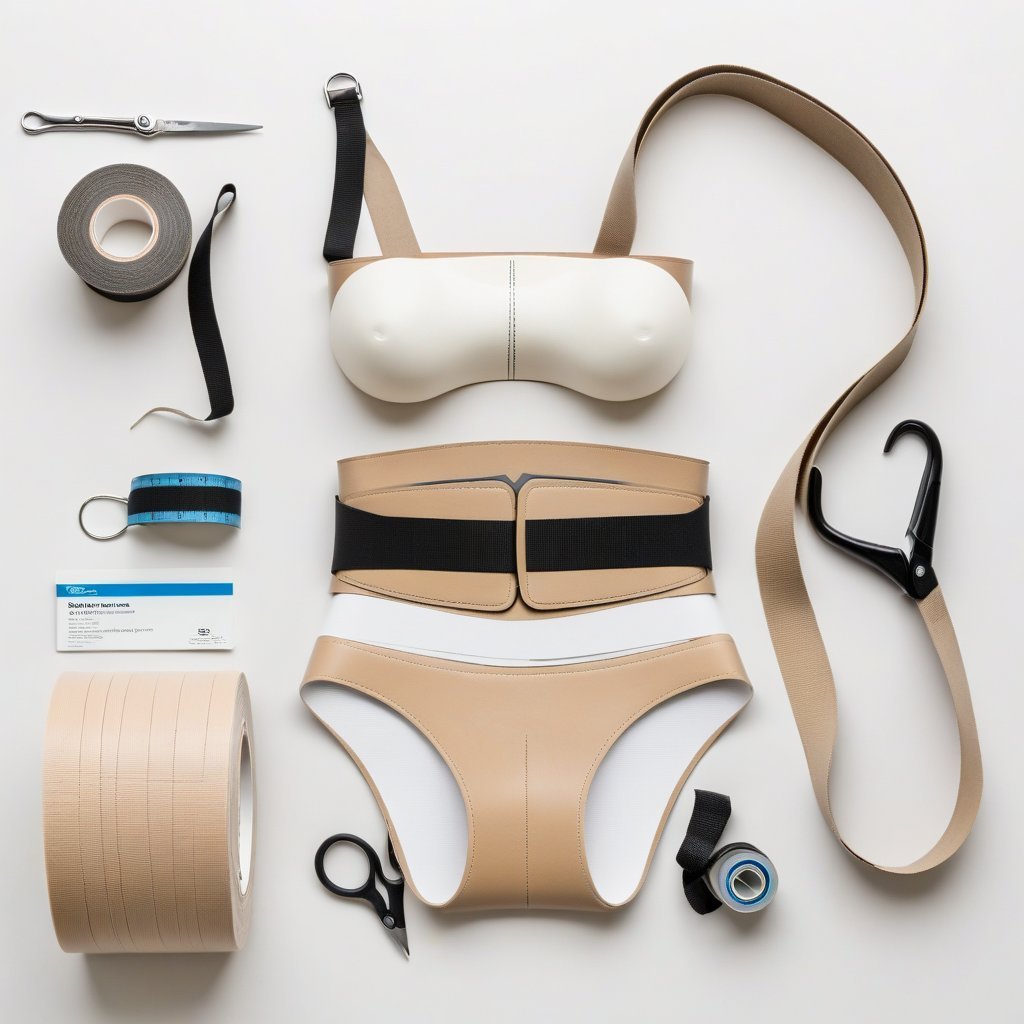
This guide covers a question many people face after surgery, or while preparing for one: in the early stages of recovery, how do kinesiology tape (often called Kinesio tape) and conventional support, like compression garments and binders, compare?
We’ll look at what each option offers, where each one tends to fit, and the practical considerations that help keep you comfortable, mobile, and safe as you return to daily activities.
One important note before we start: this article is general information, not medical advice. Your surgeon or physical therapist should always decide which support is right for you and when.
Kinesio Taping vs. Conventional Support: The Basics of Each Approach
The goal of this comparison is to explain what each option offers early in recovery.
Kinesiology tape is an elastic tape applied to the skin to give muscles and joints light support while still allowing movement.
Conventional support, such as a compression garment or abdominal binder, provides firmer, more structured containment focused on stability. The benefits and limitations of each depend on the type of procedure, your history, and where you are in recovery.
In simple terms, it’s a choice between a more movement-friendly approach and a more protective one.
Kinesio tape tends to allow more natural movement, which some care teams like for areas where gentle mobility is part of recovery.
Conventional support usually offers firmer stability, which can be helpful when discomfort is higher or when protecting the area is the priority.
Factors that often shape the decision include comfort, how well you tolerate compression, the kind of movement your recovery requires, the presence of incisions or scars, and the stage of healing.
Whatever the choice, it should come from an individual assessment by a qualified medical professional, with ongoing attention to how your body responds.
How Kinesio Tape May Support Early Recovery Without Limiting Movement
The Basic Idea
Kinesio tape uses a stretchy tape that provides light support without restricting natural movement.
It can be applied to specific areas to offer a sense of support and comfort during everyday activities.
The idea is to make movement feel easier while you keep the control and confidence you need during recovery.
Application matters: direction, tension, and anchor points all make a difference.
Careful application also helps avoid skin irritation.
For safety, the tape should be applied or shown to you by a trained professional who knows your situation.
Many people say the tape gives them a reassuring sense of support during simple movements, like breathing deeply, bending slightly, or changing positions.
Where Kinesio Tape Is Commonly Used
Early in recovery, tape may be used on areas that need gentle support, such as around the trunk, where comfortable breathing and torso movement matter.
It’s typically applied to support without pressing too hard, respecting each person’s pace.
Taping is often paired with light, guided exercise prescribed by your care team.
The goal is to feel supported without becoming dependent on the tape.
A Complement, Not a Replacement
Kinesio taping in early recovery is generally seen as a complementary option, not a substitute for the care plan your surgeon or therapist gives you.
Professional guidance is essential to adjust the technique, keep an eye on your skin, and adapt as you progress.
Risks and Limitations
Not everyone responds the same way to tape.
Skin irritation or temporary discomfort can happen, especially if it isn’t applied correctly.
Stop using it and contact your care team if you notice strong redness, persistent itching, or increased pain.
Conventional Support: Advantages and Limitations in Early Recovery
Advantages
Conventional support provides stable containment that can limit uncomfortable movement and give many people a sense of protection.
In the early stages, it can make everyday activities like getting dressed, walking around the house, or doing basic tasks feel more manageable.
It can be especially useful when the goal is to reduce strain on the area.
It’s also predictable: the pressure from a garment or binder tends to stay consistent throughout the day.
Many people say that sense of security helps them stay active with light self-care.
Limitations
Conventional support can restrict range of motion more noticeably.
Long-term use may also need adjustments to avoid skin discomfort and irritation.
Comfort varies with the fabric, the fit, and your own tolerance.
That’s why it should be used as directed by your care team, with regular check-ins to adapt it as your needs change.
When Conventional Support May Be a Better Fit
When there’s a strong feeling of instability or significant discomfort, a support garment can give you a secure base for daily activities.
Surgeons and physical therapists often recommend temporary compression alongside breathing exercises, gentle stretching, and guided movement.
7 Practical Factors to Discuss with Your Care Team
1. Your Recovery Goal
If the goal is to keep breathing and gentle movement comfortable, Kinesio tape may be helpful.
If the priority is stability and reducing load on the area, conventional support may be a better fit.
2. Your Tolerance for Compression
Some people are comfortable with tape; others prefer firmer containment.
How you respond is a key part of the decision.
3. Incisions and Scars
Recent incisions and scars need protection from friction and should only be taped or covered as your surgeon allows.
4. Your Daily Activities
For activities that call for more movement, tape may offer a balance between support and freedom.
For tasks where stability matters most, conventional support may be the better choice.
5. Comfort and Confidence
Feeling secure during everyday activities is a big part of feeling well.
Your own sense of comfort and confidence matters.
6. Ease of Adjustment
Recovery requires ongoing monitoring.
The option that’s easier to adjust and check on often works best.
7. Combining Approaches
Some care teams combine both, introducing one or the other as recovery progresses.
Any combination should be supervised by a professional.
How They’re Often Combined in Practice
A common pattern is to start with conventional support for stability in the first weeks, then, once the care team sees progress, introduce tape to support movement while keeping some sense of support.
This gradual approach, together with guided exercise and breathing practice, aims to help you regain independence at your own pace.
Either way, regular check-ins with your care team are what keep the plan on track.
Safety: Warning Signs and When to Call Your Care Team
Signs It’s Time to Reassess
If you notice persistent skin irritation, severe redness, or pain that gets worse with use, stop and contact your surgeon or physical therapist.
Significant discomfort with deep breathing or coughing, or changes in movement that don’t go away, should also be checked promptly.
Recovery should trend toward steady improvement over days; new or worsening symptoms are a reason to call your care team.
Simple Skin-Care Tips
Keep the skin clean, use skin-friendly products, and follow removal instructions carefully to reduce friction.
Moisturizing (away from incisions) and giving your skin breaks between applications can help keep you comfortable.
Where a Spa Fits into Post-Surgery Comfort
Medical decisions about tape, garments, and rehab belong to your surgeon and physical therapist. Once you’re cleared, gentle spa care can be a calming part of feeling like yourself again.
At Best & Beyond Spa in Woburn, many clients add lymphatic drainage massage to their recovery routine with their doctor’s approval. It uses light, rhythmic strokes designed to feel gentle and relaxing.
Open communication, gentle technique, and respect for your timeline are at the center of how we care for every client.
Frequently Asked Questions
What is the main difference between Kinesio tape and a compression garment?
Kinesio tape is a stretchy tape applied to the skin that offers light support while allowing movement. A compression garment or binder wraps the area with firmer, even pressure focused on stability. Your care team will recommend which one fits your stage of recovery.
Can I use Kinesio tape after surgery?
Only if your surgeon or physical therapist approves it. Tape should never go over a fresh incision, and it’s best applied by someone trained in taping who knows your situation.
When can I get a lymphatic drainage massage after surgery?
Timing depends on your procedure, so always ask your surgeon first and bring their clearance to your appointment. Let your therapist know the type and date of your surgery so they can adapt the session.
Can I use tape and a compression garment at the same time?
Some care teams combine them, using a garment for stability and tape to support movement during certain activities. This should always be guided by a professional who can monitor your skin and comfort.
Cleared by your doctor and ready for some gentle care? Book a lymphatic drainage massage in Woburn at Best & Beyond Spa and let our team help you relax and feel more comfortable.


